|
Год выпуска: май 2026
Автор: The Economist Newspaper and The Economist Group
Жанр: Экономика/Политика
Издательство: «The Economist Newspaper Ltd»
Формат: PDF (журнал на английском языке)
Качество: OCR
Количество страниц: 84
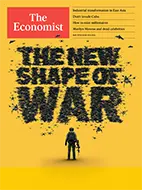
The new shape of war
- As military technology gets smarter, starting wars of choice seems dumber. Smaller, weaker countries can defend themselves more easily with cheap, deadly kit: leader, page 9.
- Wars are becoming more common but not more decisive: Essay, page 19.
Industrial transformation in East Asia
- As they deindustrialise, Taiwan, South Korea and Japan must reform: leader, page 10.
- AI is concealing industrial rot in Japan, South Korea and Taiwan, page 65.
Don’t invade Cuba
- Far better for Donald Trump to strike a deal with the communist regime: leader, page 11.
- No one in the White House knows what to do next, page 31.
- The fiendishly tough task of reviving Cuba’s economy, page 32.
How to mint millionaires
- Why the world needs more franchises: leader, page 12.
- Franchising has quietly made countless Americans rich. It could gain many more converts in the age of AI, page 59.
Marilyn Monroe and dead celebrities
- On her centenary, the late blonde bombshell is still lucrative, page 79.
The world this week Politics
- Hopes that America and Iran were close to reaching a deal to end their war and reopen the Strait of Hormuz were on shaky ground. In what it described as “purely defensive” measures, America shot down Iranian drones and conducted air strikes against military targets in Iran. Iran retaliated; Kuwait, the home of an American air base, intercepted a barrage of drones and missiles. Days after claiming that a deal was nearly done, Donald Trump dismissed Iranian claims that one was close, insisting that America would not allow Iran to control the strait in any settlement.
- Israel stepped up its offensive against Hizbullah, an Iranian-backed militia, in southern Lebanon. It extended its combat zone against Hizbullah’s operations to all areas south of the Zahrani river, which lies 40km (25 miles) north of the Israeli border, and told all residents to evacuate. Separately, Hamas confirmed that Israel had killed the new leader of its armed wing in an air strike on Gaza. His predecessor had been killed by Israel just a week earlier.
- The WHO called for a ceasefire in the east of the Democratic Republic of Congo to help tackle the Ebola outbreak there. More than 1,000 suspected cases and around 250 deaths have been reported; both figures are almost certainly undercounts. Fighting has hindered response efforts and exacerbated the spread. Meanwhile, Canada and the Bahamas imposed similar travel bans to America’s on residents from three African countries.
- Bassirou Diomaye Faye, the president of Senegal, dissolved the government and replaced Ousmane Sonko, the prime minister, following months of disagreement over tackling the country’s ballooning debt. Days after he was fired, parliament reinstated Mr Sonko as an MP and elected him speaker. Mr Faye hoped that Mr Sonko’s departure would ease talks with the IMF, but it will probably deepen the disruptive rivalry between the two men.
Smackdown
- Donald Trump’s favoured candidate won the Republican primary for a Senate seat in Texas. Ken Paxton, the scandal-plagued state attorneygeneral, trounced John Cornyn, the incumbent senator since 2002, by 64% to 36%. Mr Trump had attacked Mr Cornyn as “very disloyal” for occasionally breaking with his agenda. Mr Paxton will face James Talarico, the Democratic candidate, in November’s midterm election.
- Tulsi Gabbard said she would step down as America’s director of national intelligence. Ms Gabbard is leaving the job to care for her husband, who has been diagnosed with a rare form of bone cancer. A longtime opponent of war with Iran, she had increasingly been sidelined by Mr Trump.
- The death toll from a gas explosion at a coalmine in China’s northern province of Shanxi stood at 82. It is the country’s worst coalmining disaster since 2009.
- The Baloch Liberation Army claimed responsibility for the suicide-bombing of a train in Quetta, the capital of Balochistan in south-west Pakistan, that killed at least 30 people. The militants said they had rammed a car filled with explosives into the train, which was carrying security personnel and their families.
- Kyiv endured one of the heaviest bombardments by Russia since the start of the war in 2022. Hundreds of drones and missiles rained down on the Ukrainian capital. One of the strikes destroyed the museum commemorating the Chernobyl nuclear disaster of 1986, when Ukraine was part of the Soviet Union. Vladimir Putin vowed to pummel Kyiv again, in retaliation for what he claims was a Ukrainian strike on a building in Starobilsk, in occupied Ukraine, killing 21 people. Mr Putin says the building was a student dormitory. Ukraine insists it did not attack the dwelling but had targeted an elite Russian drone unit.
- As it steps up its attacks on “decision-making centres” in Kyiv, Russia’s foreign ministry warned foreign citizens, diplomatic staff and personnel at international organisations “to leave the city as soon as possible”. The European Union summoned the top Russian diplomat in Brussels to voice its anger. “The EU is not going anywhere,” said the bloc’s ambassador to Kyiv.
- In Turkey riot police were deployed to the headquarters of the main opposition Republican People’s Party (CHP) to force the removal of its leader, Ozgur Ozel. This came after a court overturned the results of the CHP’s leadership election in 2023, claiming there were procedural irregularities. The court reinstated Kemal Kilic-daroglu, the opposition’s losing candidate against Recep Tayyip Erdogan at the previous presidential election, as CHP leader. The party described the court’s decision to remove Mr Ozel as a “judicial coup” designed to hurt the CHP ahead of possible early elections.
- Police entered the headquarters of the ruling Socialist Party in Spain as part of an investigation into corruption. Earlier, tens of thousands of people marched in Madrid demanding the resignation of Pedro Sánchez, the prime minister.
- Mette Frederiksen was given another chance to form a centre-left government in Denmark, after talks aimed at forming a coalition among her centre-right rivals broke down. At an election in March Ms Frederiksen’s Social Democrats won the most votes, though it was the party’s worst result since 1903. Ms Frederiksen has remained interim prime minister since March.
- Nationwide protests continued across Bolivia. Rodrigo Paz, the centrist president, said he would cut his salary in half along with other members of his cabinet to demonstrate their commitment to the country. Protesters want the government to curtail its austerity programme. One minister’s car was pelted with stones when he visited a security operation to remove protesters’ roadblocks.
Don’t leave me this way
- Mark Carney, Canada’s prime minister, warned separatists in Alberta that they would regret leaving the federation if they chose to do so, comparing them to Brexiteers in Britain who voted to leave the EU. His remarks came after Alberta’s premier called a public ballot for October 19th that will decide whether a referendum on separatism should be held.
- The Mexican government said that Iran’s football team would be allowed to stay in Tijuana and cross the border into America to play in the World Cup, which starts on June 11th. Donald Trump has said the players should not stay in America for their own safety. They were supposed to be based in Arizona. The Iranian team is playing its matches in Los Angeles and Seattle in the tournament’s opening round.
The world this week Business
- BP’s share price fell sharply, after the oil company abruptly removed Albert Manifold as chairman. In a statement the board said that serious concerns had been raised about Mr Manifold’s “governance oversight and conduct”, which news reports suggested was to do with his pugnacious managerial style. At BP’s annual general meeting in April 18% of shareholders voted against a resolution to make Mr Manifold a director. Mr Manifold said that the claims of him being bullying and overbearing in the job were a “false narrative” and suggested that he’d been ousted for his “determination to drive change on costs” among other things. He became BP’s chairman only last October.
Not all according to plan
- SpaceX’s inaugural test of its redesigned V3 Starship rocket was mostly successful. The upper part satisfactorily released 22 satellite simulators and completed a planned crash landing in the Indian Ocean. But the booster lost control and hurtled into the Gulf of Mexico. Jared Isaacman, NASA’s boss, was at SpaceX’s launch site in Texas. His agency hopes to use a modified Starship to land humans on the Moon.
- The Dutch government blocked a takeover of Solvinity, a firm that provides the platform for the Netherlands’ digital ID app, by Kyndryl, an American company, concluding that it was a “possible risk to the public interest”. It is the first time the Dutch agency that screens foreign investments has blocked an American acquisition since its creation in 2020.
- More consolidation beckoned in the food-delivery industry as Delivery Hero confirmed that it had been approached about a takeover by Uber. Uber has increased it stake in Delivery Hero, which is based in Berlin and operates under various brands in 65 countries outside the United States. Last year DoorDash, Uber’s main rival in America, agreed to buy Deliveroo, which conveys pizza and Chinese dishes to households across Britain and the EU.
- Powered by huge demand for their memory chips Micron and SK Hynix both passed $1trn in market value, joining Samsung, which recently rose above that mark. Prices for memory chips were twice as high in the first quarter than in the previous one because of the voracious appetite from data centres for use in AI, causing a supply crunch in consumer electronics, such as smartphones and laptops. Samsung’s and SK Hynix’s stock drove South Korea’s KOSPI index to another record. The two companies account for half the KOSPI’s market capitalisation.
- American and South Korean chip companies are doing well, but “Taiwan is the epicentre of the AI revolution”, according to Jensen Huang, Nvidia’s chief executive. Mr Huang was speaking at a ceremony that marked the start of construction on Nvidia’s new offices in Taiwan, which brings it physically closer to TSMC, a big manufacturer of the advanced semiconductors used in AI and an important partner for Nvidia. Mr Huang reckons his company will eventually invest $150bn a year in Taiwan.
Labour and capital
- Staff who work in Samsung’s chip business, meanwhile, voted to accept a deal that will see them share 10.5% of the company’s operating profit. The agreement averts a damaging strike. Some workers will reportedly get bonuses of around $400,000 under the settlement.
- The European Central Bank held a meeting with banks in the euro zone to discuss their plans for dealing with security risks from AI, and Anthropic’s Mythos model in particular. Luis de Guindos, who is stepping down as the ECB’s vicepresident, said that the banks should invest more in cybersecurity as the risks of AI tapping into their systems was “going to be quite structural in the near future”.
- Sri Lanka’s central bank raised its benchmark interest rate by one percentage point, to 8.75%. It was the biggest increase in three years and took markets by surprise. Like neighbouring India, Sri Lanka is battling surging inflation caused by the spike in energy prices and a depreciating currency, as it pays more in dollars for its imported energy.
- A marketing campaign by the operator of Starbucks in South Korea has backfired spectacularly. Starbucks Korea promoted a drink tumbler it called the “tank” and designated May 18th as “Tank Day”. Unfortunately, that is also the anniversary of a revolt in the city of Gwangju in 1980 against the country’s then dictatorship, when actual tanks killed over 200 protesters. The campaign also used the strapline “Thwack it on the table!”, which some took as a reference to the killing of a student activist. Amid public outrage and calls for a boycott, the head of the group that owns Starbucks Korea apologised. The operator’s boss has been sacked.
скачать журнал: The Economist May 30th 2026
|