|
Год выпуска: июль 2026
Автор: The Economist Newspaper and The Economist Group
Жанр: Экономика/Политика
Издательство: «The Economist Newspaper Ltd»
Формат: PDF (журнал на английском языке)
Качество: OCR
Количество страниц: 84
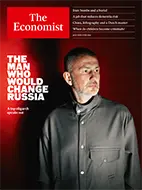
The man who would change Russia
A leading oligarch speaks out, warning of the looming disaster facing his country
WHEN ENOUGH Russians feel the endless fighting in Ukraine is futile and that they are paying the price, their president, Vladimir Putin, will be forced to do something spectacular to break the deadlock. This is why it pays to watch Russia for warnings of fatigue or discontent. Our cover this week features the most stunning such warning so far.
It comes from Andrey Melnichenko, the world’s fertiliser king and Russia’s biggest industrialist. Mr Melnichenko is hardly a member of the anti-Putin opposition. Far from criticising the invasion, he is an insider whose factories have supported the war economy. Nor is he being high-minded. Having run his companies outside Russia, Mr Melnichenko returned in 2023 as the scope for global business shrank. Like most oligarchs, he has lived by Mr Putin’s rules—make money, but keep your nose out of politics. He is talking now because he and his fellow tycoons can no longer afford to ignore the rot in a country they watched descend into tyranny.
Mr Melnichenko issued his warning over nearly 60 hours of interviews with The Economist (see 1843) and more guardedly in an essay we are publishing online. It is the first time an oligarch in Russia has spoken out at such length. We are giving him space not because we agree with all his views or because he is a champion of democracy and human rights. Instead, he is a pragmatist who wants his firms to thrive.
That is why his call could resonate in a country where wars gone wrong, including the defeat to Japan in 1905, have led to campaigns by industrialists for political change.
Mr Melnichenko’s words go far beyond the war, to the bleak outlook for Russia and its neighbours. He warns the West not to wish for Russia to descend into chaos, brutal autarky or a sullen, dangerous dependency. Although he does not say that Mr Putin must be removed from power, the change he wants would amount to an end to one-man rule.
What makes Mr Melnichenko’s intervention so striking is that the Ukraine war has come home to Russia. After Ukrainian attacks on its energy industry, the country is witnessing queues for fuel and fistfights at filling stations. The annexation of Crimea in 2014 boosted Mr Putin’s popularity; today the peninsula is being isolated by Ukrainian drone strikes. Forced military enlistment is feeding resentment. Influencers’ complaints about the war are going viral on social media.
This reality belies Mr Putin’s repeated promises that the special military operation is on track and a breakthrough is at hand. Although the Russian economy is not about to collapse and people are not about to rise up, Russians increasingly feel that their country has reached a dead end (see Europe section).
Mr Putin may well try to reassert his authority by escalating the war and repressing people at home. Some Western intelligence services have recently reported that Russia is about to intensify its confrontation with NATO. At his darkest, Mr Melnichenko fears the use of a tactical nuclear weapon in an attempt to terrorise Ukraine’s European backers—though Western analysts still discount that.
Mr Melnichenko argues that escalation would not lead to a lasting peace between Russia, Ukraine and Europe. Left unsaid is that, if ordinary Russians become alarmed by the war and more resentful because of a broad mobilisation and political repression, that will only exacerbate Mr Putin’s problems at home—leading to the next round of escalation.
These gloomy thoughts take Mr Melnichenko to the heart of his argument. He sets out his thesis in a series of long-term scenarios for Russia, all of which, he says, would be dangerous for Russia and the world.
Most alarmingly, Russia could collapse into anarchy, as warlords struggle for control of resources and nuclear weapons. That fear was real enough to lead the Biden administration to seek to avoid Russia being humiliated in Ukraine.
Or Russia could come under the thumb of foreign powers. It may be dominated by China, which could use it to supply raw materials and serve as a buffer against America. Or, after a war of attrition, maybe Russia will exist on the periphery of Europe, an impoverished dependant. Both outcomes would breed resentment and discontent, he predicts, incubating a violent nationalism that may one day explode into conflict.
In the last scenario Russia would turn inward, like North Korea, a closed fortress under siege, starved of growth and capital. This is apparently being actively discussed in the bowels of the Kremlin. Yet, like North Korea, Russia would be in a state of permanent war against the world.
Mr Melnichenko is enigmatic about how precisely to avoid these outcomes. Self-serv-ingly, he urges Western countries to resist the temptation to push the war to its limits. Instead, they and Russia must find a way to live in peace. To this end, he calls on them to grant Russia “sover-eignty”—an immunity that sounds a lot like China’s demand for non-interference. About reform in Russia, he is elusive. The country must be predictable to the outside world and must win over its people without resorting to coercion. Implicitly, he wants Mr Putin to relinquish one-man rule and devolve power. But he does not talk about democracy.
Even that will run up against the securocrats, top dogs since Mr Putin banished the original post-Soviet oligarchs from politics over two decades ago. If Russia becomes a more normal country, they will be the losers. Perhaps, though, technocrats and moguls fearful for Russia will take Mr Melnichenko’s side. Mr Putin may refuse to yield. But he is in a bind. Grinding on, escalation and reform would each carry costs.
Reform has a precedent. In 1905 Russia lost a 19-month war to Japan. Industrialists and technocrats blamed the dictatorial Nicholas II. It showed, they said, that one-man rule doomed Russia to be behind the rest of Europe. That year, after an uprising, they forced the tsar to accept the October Manifesto, which proposed civil liberties and a legislative assembly.
By mid-1907 Nicholas had crushed the reforms; a decade later he was toppled in the revolution. The hope must be that Russia learns this lesson: it needs reforms that last.
- A leading Russian oligarch speaks out, warning of the looming disaster facing his country: leader, page 7.
- Russians are growing anxious and angry as the war hits home, page 41.
- After training as a physicist, Andrey Melnichenko became Russia’s biggest industrialist. Now, he tells Arkady Ostrovsky, he has a plan for the existential challenge facing his country: 1843, page 51.
Iran: bombs and a burial
- The country’s new ultranationalist leaders may welcome the American president’s declaration that the ceasefire is over—even if it is bluster, page 33.
A jab that reduces dementia risk
- One simple vaccination may make a big difference. More people should get it: leader, page 9.
- The world is making heady progress in the fight against the condition: briefing, page 13.
- An ageing society might not cost too much: Free Exchange, page 71.
China, lithography and a Dutch master
- Has China obtained the world’s most important machine? Page 29.
- its chip industry is advancing rapidly, page 62.
When do children become criminals?
Popular demands to lower the age of criminal responsibility should be resisted: leader, page 10.
Child criminals are being prosecuted at younger ages. That may backfire, page 48.
The world this week Politics
- Donald Trump began the NATO summit in Ankara, Turkey’s capital, by airing his grievances with allies. He grumbled about their lack of support for the Iran war and said that the row over Greenland had also “hurt my relationship” with Europe, reiterating his belief that America should control the Danish territory. But he softened his tone during the gathering and signed up to a communiqué that reasserted NATO’s “ironclad commitment to our collective defence”.
We need your help
- Mr Trump also made a significant concession to Ukraine by granting it a licence to make Patriot surface-to-air interceptor missiles, a response to a plea from Volodymyr Zelensky for more air-defence systems. The Ukrainian president’s request came after Russia again pounded Kyiv, killing 28 people. A bombardment a few days earlier killed 30. Ukraine could not stop the ballistic missiles used in the attacks. Meanwhile, Ukrainian drones struck Russia’s largest oil refinery at Omsk, 2,700km (1,680 miles) from Ukraine. Mr Trump said he backed Ukraine striking deep inside Russia as a means to end the war.
- Iran launched drone attacks on three tankers it said had ignored designated shipping routes through the Strait of Hormuz. Mr Trump ordered new strikes on Iran and revoked the waiver of sanctions covering Iranian oil exports. Mark Rutte, NATO’s secretary-general, supported America’s actions as “absolutely necessary”. Iran responded with attacks on Bahrain, Kuwait and Qatar. The American president said that Iran’s leaders were “scum” and the ceasefire was “over”.
- The funeral was held of Ayatollah Ali Khamenei, Iran’s former supreme leader, who was killed in February on the first day of the war. His coffin travelled for six days over 2,600km (1,600 miles), across five cities in Iran and Iraq. Mojtaba Khamenei, his son and successor, did not appear at the funeral; he has not been seen since the strike that killed his father.
- In Algeria, the result of a recent election confirmed that the ruling National Liberation Front and allied parties retained a majority in the parliament, which usually rubberstamps decisions by the president. Only 21% of those registered bothered to vote, the lowest turnout ever recorded.
- The paramilitary Rapid Support Forces encircled el-Obeid in central Sudan, trapping half a million civilians. Reports emerging from the city are eerily reminiscent of those from el-Fasher, where the RSF is accused of massacring perhaps tens of thousands of civilians last October.
- Zimbabwe’s president signed into law constitutional amendments to extend and cement his hold on power. The change abolishes direct presidential elections and postpones the next vote. Emmerson Mnangagwa, who is 83, had previously promised to step down once his term ends in 2028.
- China carried out a rare test of a long-range ballistic missile over the Pacific Ocean. The missile, with a dummy warhead, was launched from a submarine, and alarmed countries in the region. Japan said it was an example of the “intensification of China’s military activities”.
- A prison riot in Sri Lanka left 20 convicts and seven guards dead. The violence in Negom-bo, just north of Colombo, was sparked by an argument among inmates about who controlled the drug-trafficking trade inside the prison.
- Pakistan said that 42 security personnel had been killed in three attacks by militants on Balochistan, a province where separatists have waged a terrorist campaign for decades. The army said 54 militants were killed in the clashes.
- The Democratic candidate in Maine’s Senate race suspended his campaign, after a woman accused him of raping her. Graham Platner has also faced other claims of misconduct. He denies the allegations. Democrats will now try to select another candidate in the race, which they must win if they hope to gain control of the Senate in the midterms.
- In France, the court of appeal upheld Marine Le Pen’s conviction for misusing European funds, but enabled her to run for the presidency next year by shortening a ban on her standing for elected office. The leader of the populist-right National Rally announced that she would indeed be a candidate for president again and would appeal against her conviction at France’s highest court, the Cour de Cassation.
Farage’s farce
- Nigel Farage, the leader of Britain’s populist-right Reform UK, resigned from his seat in Parliament, triggering a by-election. Mr Farage has come under scrutiny and criticism for a £5m ($6.7m) donation he received. Mr Farage says his constituents “should be the judges” of his actions. The main political parties won’t stand in the by-election, so Mr Farage will do battle with the likes of Count Binface and the Monster Raving Loony party in an attempt to re-establish his credibility.
- The suspect in the parcel bombing of a Ukrainian oligarch and his family in Monaco was found dead in Ukraine with gunshot wounds to her head. An employee at Ukraine’s intelligence service and a former police officer were arrested in connection with her murder.
- The authorities in Cuba struggled to restore power following another collapse of the electricity grid. Meanwhile, Raúl Guillermo Rodríguez Castro, the grandson of Raúl Castro, Cuba’s former leader, said he was willing to negotiate with America. Mr Rodríguez Castro held a secret meeting with Marco Rubio, America’s secretary of state, in February.
- The International Olympic Committee provisionally lifted its suspension of Russian athletes, though it hasn’t decided if the Russian flag and anthem will still be barred. The suspension was introduced in October 2023 because Russia was organising Olympic committees in occupied Ukraine.
- At the World Cup Folarin Balogun, America’s star player, received a red card for a dangerous challenge on an opposing player, which meant he should have been suspended from America’s next game, against Belgium. Donald Trump complained to the president of FIFA, football’s world body. FIFA has the discretion to suspend the ban, which it duly did after Mr Trump’s intervention. It is the only time a red card has been suspended at a World Cup since automatic bans were standardised in 1970. UEFA, Europe’s governing body, said FIFA had “crossed a red line”. The US team was subsequently thrashed 4-1 by Belgium.
The world this week Business
- A year after legislation passed to create them, “Trump Accounts” became operational. American babies born from 2025 to 2028, the four years of Donald Trump’s second term, can register and have $1,000 invested for them in American shares. Despite being named after the president, the scheme is funded mostly by the taxpayer, with companies, wealthy individuals and parents adding top-ups. Last year the Michael and Susan Dell Foundation pledged $6.3bn for the programme. The Treasury has said that 6m Trump Accounts have been opened so far.
- A week after the Trump administration lifted its ban on Anthropic’s latest AI models, OpenAI rolled out GPT-5.6, its most advanced machine-learning system. The launch had been delayed by the government’s request that it be released to only a limited number of vetted users to assess the security risks; it is now reportedly satisfied that GPT-5.6 has passed those extra checks.
- SK Hynix’s share offering on the Nasdaq exchange was heavily oversubscribed ahead of the stock’s debut on July 10th. The South Korean chipmaker is seeking to raise $28bn through the sale of American depositary receipts (enabling investors in the US to buy its stock), which after SpaceX would be the second-biggest share offering on record.
- Samsung, which is also benefiting from the demand for memory chips, said it expects to log an operating profit for the second quarter of 89.4trn Korean won ($59bn), another record for the company and double its operating profit for all of 2025. But the share prices of Samsung and SK Hynix fell heavily amid more investor jitters about the durability of AI spending.
- SpaceX’s stock was added to the Nasdaq 100, a weighted index of leading non-financial companies, including Apple, Nvidia and Walmart. A rule change allowed the rockets-and-AI company to join the Nasdaq 100 less than a month after it floated shares in an initial public offering. Its stock will now be tracked by hundreds of passive investment funds. SpaceX’s share price is still trading above the $135 it was priced at in the IPO.
A new frontier
- The European Central Bank asked 110 banks to present credible plans for dealing with the security threat from advanced AI models. The Bank of England also mentioned the threat from frontier AI in its latest report on financial stability, warning that the technology will “increase the sophistication and impact of cyber-attacks” on financial institutions and market infrastructure. Andrew Bailey, the Bank of England’s governor, called for co-operation among regulators in dealing with the security implications of AI, but said, unlike the ECB, he would not be issuing edicts to banks.
- Yields on Japan’s ten-year government bonds reached 2.9%, the highest since 1996, pushing up the costs of borrowing. Gross public debt is over 200% of GDP. As well as being concerned about the weak yen, investors are said to be worried about how the government is going to fund its recently announced $2.3trn, 14-year investment plan.
- After holding out for a higher offer, easyJet, a European low-cost airline based in Britain, reached a preliminary agreement to be sold to Castlelake, an American investment firm, which would value the carrier at £5.5bn ($7.3bn).
- Castlelake, which has managed hundreds of planes through its leasing business, must make its offer official by August 3rd under British regulatory law.
- UniCredit, a big Italian bank, announced that it had increased its stake in Commerzbank, a German lender, to 47.6%. UniCredit has been trying to take over Commerzbank for over a year, but its overtures have been rejected by the German company and the German government.
Call of duty
- After declaring that the games industry is “facing the most severe hardware crisis in its history”, Microsoft cut 3,200 jobs at its Xbox business, 1,600 of which were lost immediately. Profit margins at Xbox are lower than at its rivals and the wide availability of online gaming has eaten into demand for its consoles. It will also get rid of five of its gaming studios and reduce costs at Activision Blizzard, a games publisher it acquired in 2023 for $70bn.
- Sky, a European broadcaster, struck an agreement to buy ITV Media and Entertainment in a £1.6bn ($2.1bn) deal. ITV M&E operates the network and streaming platforms of ITV, Britain’s legacy commercial channel. The transaction does not include the more lucrative ITV Studios, which produces ITV’s programmes, such as “Coronation Street” and “Poirot”. Sky is a subsidiary of Comcast, which intends to spin off Sky and NBCUniversal into a separate company.
скачать журнал: The Economist July 11th 2026
|