Навигация по сайту
Bloomberg Businessweek October 2026 |
|
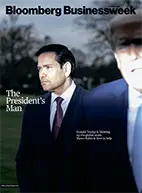
Год выпуска: October 2026 Автор: Bloomberg Businessweek Жанр: Экономика/Финансы Издательство: Bloomberg L.P. Формат: PDF (журнал на английском языке) Качество: OCR Количество страниц: 112 Catastrophic ConsequentialismRarely has the post-World War II global order felt so messy. America’s six-month-long war against Iran has entrenched the Islamic regime, closed the Strait of Hormuz and sent oil prices soaring. Despite Donald Trump’s promise that he’d end the conflict in Ukraine “on Day 1,” it rages unabated. Meanwhile, the president constantly swaps US enemies and allies, wooing North Korea’s Kim Jong Un while weakening ties with South Korea, making fresh threats to wrest control of Greenland from NATO member Denmark, and instigating a trade war and an absurd Great Lakes-naming tussle with America’s erstwhile friend to the north, Canada. One of Trump’s favorite words these days to describe his own presidency is “consequential.” He wants to be seen as a historic leader who remapped the world and shifted the tectonic plates of history. At home, that’s meant erecting monuments, demolishing a wing of the White House to make way for a ballroom over a chorus of legal and practical objections, and renaming places for both himself and the US at a steady clip. Abroad, trying to preordain his own legacy has required waging economic warfare on an unprecedented scale and, in cases where that hasn’t worked on an acceptable timeline, such as Venezuela and Iran, using military force. But foreign countries and their leaders aren’t as easily coerced as US lawmakers. And Trump’s second-term quest to be consequential looks poorly conceived and, at least for now, nothing short of catastrophic. The president’s crusade intensified on April 2, 2025, when he signed an executive order announcing sweeping tariffs on imports. China answered these so-called Liberation Day tariffs by rolling out its own levies and restrictions on US goods and withholding access to rare earths that are vital to manufacturing in aerospace, defense and other industries. At the same time, European nations, feeling jilted by a longtime partner, deepened their relationships in South America, Asia and the Middle East. Countries found they didn’t need America to the extent they once thought. Instead, the primary victim of Trump’s tariffs wound up being America itself. US companies and their customers had to pay the levies, while business leaders were left to survey a more hostile landscape abroad, with longstanding allies searching for backups to America’s artificial intelligence models, cloud computing services and even the dollar. “You basically have the entire world eager now to build workarounds to the US financial system,” says Edward Fishman, a senior fellow at the Council on Foreign Relations and the author of Chokepoints: American Power in the Age of Economic Warfare. “It’s not just problematic from an American power standpoint, it’s problematic for our businesses and for American economic dynamism.” When economic pressure was ineffective, Trump’s quest to be consequential required a more forceful approach. That worked in Venezuela in January, when Special Forces neatly extracted President Nicolás Maduro and his wife from Caracas and installed a leader more inclined to give the US access to its prodigious oil reserves. Emboldened by their success, Trump and his advisers then tried to run the same playbook in Iran. Acting in concert with Israel, they killed Supreme Leader Ali Khamenei, significantly set back the country’s nuclear program— and prodded Iran to use its leverage over the Strait of Hormuz, the conduit for about 20% of the world’s oil shipments. In trying to leave a lasting mark on the map in his second term, Trump has learned that coercion doesn’t always deliver the desired result. Sovereign countries aren’t easily steamrolled, and exerting pressure can be counterproductive—solidifying support for even unpopular leaders and hardening their resolve. Cuba, another country on Trump’s regime-change wish list, is a 70-year-old object lesson in the high pain tolerance of authoritarian nations bent on challenging American hegemony. Democracies, on the other hand, tend to have a comparatively low pain threshold. They wobble at the first sign of higher fuel prices, a slowing economy and, especially, wartime casualties. One question the October issue of Bloomberg Businessweek poses is what kind of political price will be paid by Trump’s top foreign affairs advisers, primarily Marco Rubio, the secretary of state. As a senator, Rubio was an internationalist who seemed to have a good handle on the limits of economic statecraft and military intervention. But unlike his predecessors in Trump’s first term, who tried to counterbalance his impetuous whims, Rubio has subjugated his expertise and sees his job as helping to execute the president’s “America First” vision of the world. If circumstances in the Middle East don’t improve by the US election in 2028, there will almost certainly be a backlash against anyone associated with that approach. It’s always possible the wind could shift in Trump’s— and Rubio’s—favor. Iran’s economy is in shambles, its new leader hasn’t been seen in months, and its proxies in Gaza and Lebanon have been weakened. “If at the end of this we have a stronger NATO because the Europeans are finally doing their own part for defense, and we’ve got different regimes in Venezuela, Cuba and Iran, that is a different global map than when Trump came in,” says Matthew Kroenig, a senior fellow at the Atlantic Council’s Scowcroft Center for Strategy and Security and an adviser to Rubio’s 2016 presidential campaign. “But we’re not there yet. There’s still a lot of stuff that could go wrong.” For now, Trump’s quixotic crusade to be considered one of history’s “great men” has awakened friends and foes alike to their own leverage over the US. It’s had consequences for sure. They’re just not the ones he imagined. Remarks
In Context
In View
B-Schools
New Economy / India
Pursuits
CEO Diet
скачать журнал: Bloomberg Businessweek October 2026
|