Навигация по сайту
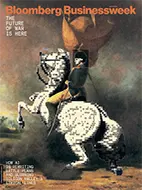
Bloomberg Businessweek April 2026 |
|
Год выпуска: April 2026 Автор: Bloomberg Businessweek Жанр: Экономика/Финансы Издательство: Bloomberg L.P. Формат: PDF (журнал на английском языке) Качество: OCR Количество страниц: 100 Epstein and the Crisis of ElitesEarly last year, Bill Gates embarked on a book tour to promote his memoir, Source Code: My Beginnings. It was an awkward moment for the billionaire philanthropist. Months earlier, Gates had made a poorly timed political bet, donating $50 million to a group supporting Kamala Harris. He was now watching Donald Trump elevate some of the fiercest Gates critics to positions of power. To lead the Department of Health and Human Services, Trump picked Robert F. Kennedy Jr., who’d spuriously claimed that Gates was implanting harmful microchips under the guise of vaccine campaigns. Elon Musk, the head of the new administration’s government efficiency effort, had mocked the Microsoft co-founder for years while promoting election-related conspiracies that centered on the Gates Foundation. Now, Musk was attempting to shut down the foreign aid apparatus he’d spent decades trying to supplement. “The world is not logical now,” an exasperated Gates told the Times of London in an interview published the week of Trump’s second inauguration. “You have to accept that you might be treated as the Antichrist for trying to help.” Gates wasn’t the only one to notice public opinion had moved against people like himself, those perceived as members of the establishment. He wasn’t even the only person who invoked the Book of Revelation in trying to define it. Last year investor Peter Thiel—who represents, along with Trump and Musk, the counterclass of billionaires supposedly challenging the status quo—delivered a lecture series titled The Antichrist, in which he complained that influential and wealthy people have the “illusion of power and autonomy, but you have this sense it could be taken away at any moment.” The sense of growing hostility toward business leaders and others in power is everywhere you look. It’s in polls that show sinking opinions of large companies, universities, the media, churches and virtually every other major institution. And it’s coincided with dueling populist political movements, embodied on the right by Trump’s attacks on a shadowy global elite and on the left by Zohran Mamdani’s broadsides against billionaires. Both men were initially treated as a joke by most every serious businessperson in America. Last summer, JPMorgan Chase & Co. Chief Executive Officer Jamie Dimon dismissed Mamdani as a Marxist and said his supporters were “idiots” who “do not understand how the real world works.” Dimon wound up looking like the one who was out of touch. Mamdani won the race for New York mayor easily and is now one of the most popular political figures in the US, according to polling from YouGov. How did business leaders get so crosswise with the public? On Night 1 of his book tour, Gates blamed diversity, equity and inclusion efforts, which he said had gone “too far.” Dimon has suggested the real problems are wealth inequality and residual anger from the 2008 financial crisis. Thiel has blamed high real estate prices driving up the cost of living. Reid Hoffman, Thiel’s former PayPal colleague and a prominent Democrat, has pinned it on Trump’s demagoguery. All these factors surely help explain voters’ anger. They also feel staggeringly incomplete. Yes, it’s the economy and inflation and lingering cultural resentment. Anxiety over artificial intelligence is surely playing a role. But there’s also a sense that our business leaders themselves are part of the problem. In other words, guys, it’s you. And this, more than almost anything, is the takeaway from the 3 million documents released by the Department of Justice in late January, the documents that much of the world has been poring over ever since. Parts of the Epstein files have been redacted, ostensibly to protect victims and preserve the integrity of ongoing criminal investigations. As a result, they largely underscore the things we already knew about the alleged crimes of Jeffrey Epstein, who in 2019 was indicted on charges that he sexually abused girls as young as 14. Expect to keep hearing about those redactions in the run-up to Election Day for years to come, if not decades. Even so, the files tell quite a bit about the people who sought Epstein’s money or friendship. They include, in different ways, all the business leaders mentioned above—plus President Trump, former President Bill Clinton, Commerce Secretary Howard Lutnick, former Treasury Secretary Larry Summers, Goldman Sachs Group Inc. general counsel Kathryn Ruemmler, former World Economic Forum CEO Børge Brende, and on and on. Bloomberg News and other outlets have published accounts of each of these people’s connections to a man who was already a convicted sex offender when they were in contact with him. Epstein’s guilty plea to charges of soliciting sex from a minor was a matter of public record by 2008 and widely enough known that it came up in emails with many of his prominent friends. (Hoffman and Thiel made vague allusions to what they characterized as his public relations problem; in an exchange with Ruemmler, Epstein referred jokingly to his “old habit.”) Even so, each prominent Epstein correspondent has denied being party to his abuses, and it’s become almost a cliché to note that doing business with Epstein (as Dimon’s company did), or flying on his jet (Gates), or even offering him advice on how to manage his “recent press” (Hoffman), does not, in itself, suggest criminality. But that’s because there is no law against hypocrisy. Or arrogance. Or staggering lapses in judgment. And it’s these qualities, more than anything, that now seem to define the prominent men and women who associated with Epstein in the 11 years between his conviction and death. The emails made public have been compelling because, though the characters are famous, the conversations can feel eerily familiar. This sense is especially acute for those who’ve chosen to read the files using Jmail, an alternative online repository that makes the document dump look like a normal Gmail inbox. The website has had 150 million visitors, says Melissa Du, one of its creators. Du notes that, though the files contain “these moments of pure evil,” most of the material “is just Epstein texting his friends.” Search Jmail, and you’ll find Musk, writing to Epstein on Christmas Day 2012 to ask if he can stop by the island for a visit. “Do you have any parties planned?” Musk writes, adding, “a peaceful island experience is the opposite of what I’m looking for.” (Musk has said he never went there.) Or you’ll find Ruemmler, previously White House counsel for President Barack Obama, accepting thousands of dollars in handbags and other luxury items from “Uncle Jeffrey” while also advising him that soliciting sex with a minor is still illegal if you pay them. (Ruemmler, who’s said she’ll depart Goldman in June, has denied wrongdoing and said she wasn’t aware of any ongoing crimes.) There’s Epstein, writing to say he’ll be dropping by Hoffman’s office with Summers and, for some reason, Hoffman’s passport. “Had wondered where it had flown to,” Hoffman writes. Summers later calls on Epstein to play Cyrano as he tries to woo an underling away from a romantic rival. “She said ‘I’m busy,’ ” the then 64-year-old economist recounts in a 2019 email littered with grammatical errors. “I said awfully coy u are.” At the time he was asking a disgraced sex offender for dating advice, Summers had an endowed professorship at America’s most prestigious university. (Summers and Hoffman have both said they regret associating with Epstein.) You can spend hours sifting through the intersections of Epstein’s life and those of some of the planet’s most powerful people. And many have, posting their findings and theories on Instagram, X and TikTok. Sometimes these are presented as faithfully rendered screenshots; other times, as elaborate and error-ridden conspiracy theories. The top search terms on Jmail are a mix of celebrities, well-known business figures and words such as “cream cheese” and “jerky” that people on the internet have decided are code for cannibalism. “It has created an environment where no newsroom on Earth can curate information from the files faster than a bunch of random idiots on the internet,” says Ryan Broderick, a journalist and media analyst who’s been covering the files for his newsletter, Garbage Day. “It makes things extremely unpredictable.” Parents are boycotting Lifetouch, the unfortunately named school-picture-day company, because it was purchased after Epstein’s death by Apollo Global Management Inc., whose former CEO Leon Black was a longtime Epstein friend and business partner. Talent agent Casey Wasserman has said he’s selling his firm following an exodus of clients, including Chappell Roan, owing to emails that show he flirted with Ghislaine Maxwell back in 2003, before she or Epstein were convicted of any crimes. Democratic Senator Jon Ossoff of Georgia and Representative Ro Khanna of California have waded into the 2028 presidential conversation by railing against the “Epstein class,” a phrase that sweeps Trump and his administration in with the Epstein-friendly CEOs. Meanwhile, livestreamer Nick Fuentes has framed the files as support for his antisemitic conspiracy theories, threading them into videos with a million or more views on Rumble, the right wing’s for-us, by-us version of YouTube. “I suspect we are barreling towards an anti-capitalist populist movement similar to Occupy Wall Street,” Broderick says. “And that we’re closer to it than we think.” A populist surge appeared to be taking shape well before the latest Epstein drop. A Gallup survey published last year showed that the share of Americans who viewed capitalism positively, 54%, was at its lowest level since the pollster began asking about it during the Obama administration. Between 2012 and 2025, the percentage of Americans who said they had positive feelings about big business fell from 58% to 37%. One explanation for these shifts has long been that supporters of populist movements were simply being misled by hucksters peddling conspiracy theories, allowing themselves to be taken in by demagogues, social media algorithms or both. But as Gates knows well, it’s tougher to complain about loony conspiracies when it looks to many like you’re standing inside of one. Although Pizzagate-era theories about a secret cabal of Democratic pedophiles remain discredited, the Epstein files have exposed a code of elite silence around a somewhat similar story. The people in the files seem to have congregated enthusiastically around a sex offender who, as Trump memorably put it in 2002, “likes beautiful women as much as I do, and many of them are on the younger side.” Pizzagate’s adherents hypothesized a lefty Eyes Wide Shut of upside-down upper-class morality. The Epstein files suggest that a bipartisan group of privileged people, people who set many of the policies governing our life, scarcely think about morals at all. This feeling has been heightened by the refusal of many former Epstein pals to take anything approaching responsibility for associating with him. There have been a handful of related resignations—most notably Ruemmler, from Goldman Sachs, and Summers, from Harvard University—but most of the people who appear in the files have kept their jobs. Musk still runs Tesla Inc. Thiel runs his venture capital firm. Hoffman is on Microsoft Corp.’s board, and Gates is advising Microsoft on technology and chairing his foundation. On Feb. 24, the Wall Street Journal reported that Gates had apologized to his foundation employees. He implied that he’d known about the 2008 conviction but said he hadn’t looked into it deeply, an explanation that, at best, doesn’t inspire a ton of confidence in his judgment. Does he not know how to Google? (Or at least Bing?) And given that reports about Epstein and Gates’ association first surfaced in 2019, why was his apology, following years of carefully worded statements that minimized the association, so late in coming? It’s possible that Gates, who is supposedly working on two subsequent volumes of his memoirs and who has said he will testify before Congress, will confront these and other failings at some point. He should. The notion of an Epstein class, whether deployed in good faith by activists seeking justice or by factually challenged YouTubers seeking attention, is here to stay. Gates is one of the greatest living capitalists. He’s also part of the reason that capitalism finds itself in a crisis of credibility. Many of America’s business icons and politicians spent years in the company of a known sex criminal. Their complicity was bad enough, but if any of us are to move forward, these tarnished leaders must stop minimizing their roles in what happened, and start making real amends. Remarks
In Context
In View
In Depth
Retirement
Pursuits
Exit Strategy
скачать журнал: Bloomberg Businessweek April 2026
|